



Monday, June 22, 2009


Wednesday, June 17, 2009
WHEN TRAVEL IS MADE EASY!

Owned and Operated by one Oslobanon (Caceresnon), the SUNRAYS bus line poses a quite tough competition with the CERES LINER.

One of the CERES aircon buses at Hagdan (Oslob) bridge-curve plying Cebu City and Liloan.

At one Hagdan ascent, from Alo.
My coming back here to iloilo more than a week ago was no different. I was soaking wet with the heavy rainfall that made me almost decide several times to postpone my trip back....
It is also during these times when you become appreciative of this gigantic transport bus line CERES.
Thanks to the comfort and luxury this CERES bus offers while one travels.
Thursday, June 11, 2009
OSLOB CHURCH: Historical Facts
http://simbahan.net/2008/03/30/the-old-stone-church-of-oslob-before-the-fire-of-march-08/
The old stone church of Oslob before the fire of March 08


The old stone church at the town proper of Oslob in Cebu. It will
celebrate its 178th year from the laying of its cornerstone on
4 May 08. On 26 March 08, an 8 hour fire gutted the more than a century old kumbento (parish house) and church of Oslob in Cebu. What was left were the thick stone walls and belfry as well as an icon of the parish patron. This is my tribute to this beautiful and historic church with photos taken in 2005 and 2006.
Located 117 kilometers southeast of Cebu City is the town of Oslob. First mentioned in 1690, it was only a visita of Boljoon. Founded by the Augustinians, it was turned over to the Jesuits in the year 1737 but was returned to them in 1742. The original fortified Spanish settlement was located in what was then called Bolocboloc but now known as Daanlungsod, (in Cebuano, means, old town). It’s high walls and watchtowers are still standing today minus the original chapel.

The church circa 1940 with the parish priest, Rev. Fr. Benigno
Cano, OSAThe current church, located a few kilometers from the fortified settlement in what was then known as Catarman (or Katadman) in the present Poblacion (town center) might not have been possible if not for one very decisive event: the victory of Fr. Julian Bermejo, parish priest of Boljoon, and the townspeople of Oslob against the Moro slave raiders led by Sultan Goranding in the year 1813. Near the waters off Sumilon Is., the soldier priest’s fleet of local defenders aided by his string of watchtowers successfully repelled and captured the leader. Since then, these places were now peaceful and threats of further raids diminished.

The view of the church nave from the left side showing the belfry (right) and transept (left). Drawn from the plans of Bishop Santos Gomez Marañon, the cornerstone was laid by Fr. Julian Bermejo on 4 May 1830. The coral stone used for the walls and belfry were quarried from the seas, cut, polished and placed one on top of the other and cemented with lime from the ashes of seashells. Wood was sourced out from other places and islands while the church roof was made of tejas sourced out and baked locally from a place now known as Lulukhan. Construction of the church was not only done by the people of Oslob but townspeople from neighboring Tañon (now Santander) and Ivisan (now Nueva Caceres, Oslob) helped in building too. Because the town was not really rich and relied on voluntary labor, it was finished 18 years later in 1848.

View of the church: (left), back, (right), left side showing the belfry, transept and quadrilateral dome.
Note the buttresses in each photo. The quadrilateral dome at the crossing of the transept and nave is made of wood. During the time of Fray de Santiago, the belfry was damaged by a typhoon. In 1932, the tejas roof was replace with galvanized iron sheets. In 1954, the wooden flooring of the church was replaced with baldozas.
On 7 November 1955, a fire of unknown cause gutted the church and in three hours, burned everything inside except for the icon of the Immaculate Conception. The people were devastated. They decided to rebuild the church and various fund raising activities were done. One of these, the Oslob Church Reconstruction Movement Caroling Team made the rounds during Christmas. Oslobanons living or working abroad also channeled funds for the church. Up until the 80’s there were several restoration works done on the church and the kumbento.

View of the church from the tennis court showing the right side including the attached kumbento. There seems to be a confusion on the fires that happened before this year’s unfortunate event. Two sources: Galende in Angels in Stone wrote that the church building was totally burned by guerillas in 1942 and was gutted by fire of unknown origin in 1955. He also mentions that the vault and dome later fell after the first fire. By the way, the Cebu Daily News article in the preceeding post takes this line. Allego, in his memorare, only mentions the 1955 fire as the 2nd cataclysm that befell the church. The first being a strong typhoon damaging the belfry during the time of Fray Gregorio de Santiago (1892-1898). I tend to go with the latter author.
With the March 08 fire, I am very much hopeful that with the people’s faith and resolve, the church will rise again.
Tuesday, June 9, 2009
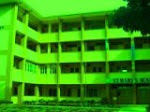
NEW PICTURES of the NEW SMA!


Vacation is FINALLY over, and THAT IS FINAL!
SMA in Oslob must have started its academic year 2009-2010 yesterday!
I had taken new photos of her during my lucky vacation in town.
Monday, June 8, 2009
Tuesday, May 26, 2009


Saturday, May 23, 2009
DAANLUNGSOD FIESTA
Stories have it, that Daanlungsod - the barangay located between Camburong and Calumpang to the South was ONCE the LUNGSOD or TOWN proper. For reasons, it was changed to where the Poblacion IS now. It further tells that whenever the PATRON was to be carried to the Poblacion, it becomes heavier for the townfolks to carry. And so light when it was time to be returned... Daanlungsod is where the NIGAD (the seaside well that has naturally cold potable waters) is situated.

Modern replica of the Patroness.

Sainthood candidate Pedro Calungsod, whose image was patterned after Ronald Tubid of University of Iloilo (high school varsity), UE warrior of the UAAP and now playing for Ginebra in the PBA.

Images of the Sto. Niño and other Saints.

The Crucified Christ on the altar.

The altar.
What's a fiesta without the FOOD?
The answer is CLEAR....

The BEST of the menus!

"THE FIRST CUT IS THE SWEETEST!"
Auntie Eca, making the first cut!

ELNOR, Jojo's eldest son, NORWIND-his brother and his cousin BRENT!

BOYS, BOYS, BOYS!

BRENT, you have to work a little harder!